EssaysNovember 11, 2026
Articles about Hani Hourani - Desert Navigation: An exhibition by the Jordanian visual artist and photographer Hani Hourani: The place where you can look as far as possible!
Hani Hourani6 min read
“Desert Navigation”: An Exhibition by Jordanian Artist and Photographer Hani Hourani
A Place Where You Can See to the Farthest Horizon!
15 January 2007
Jordan — Al-Quds Al-Arabi
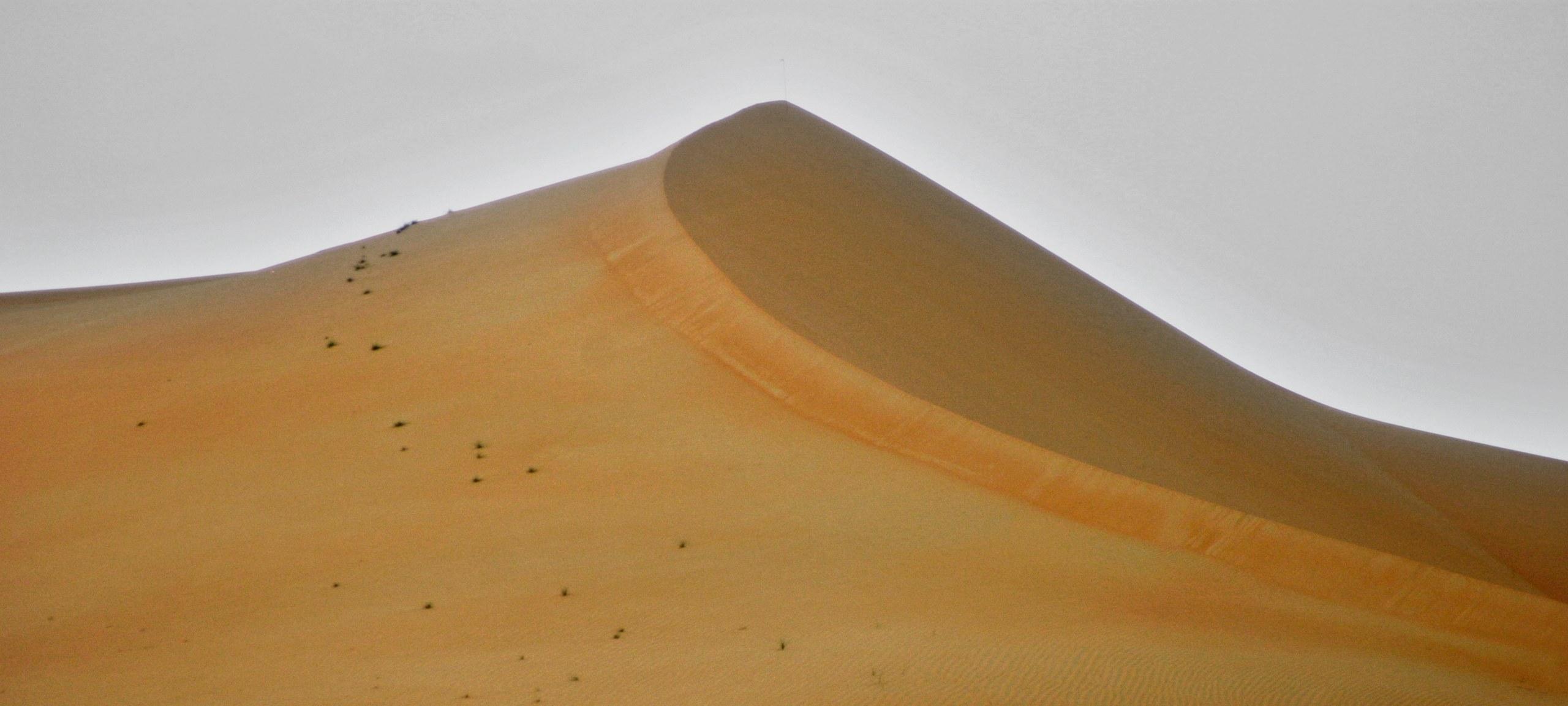
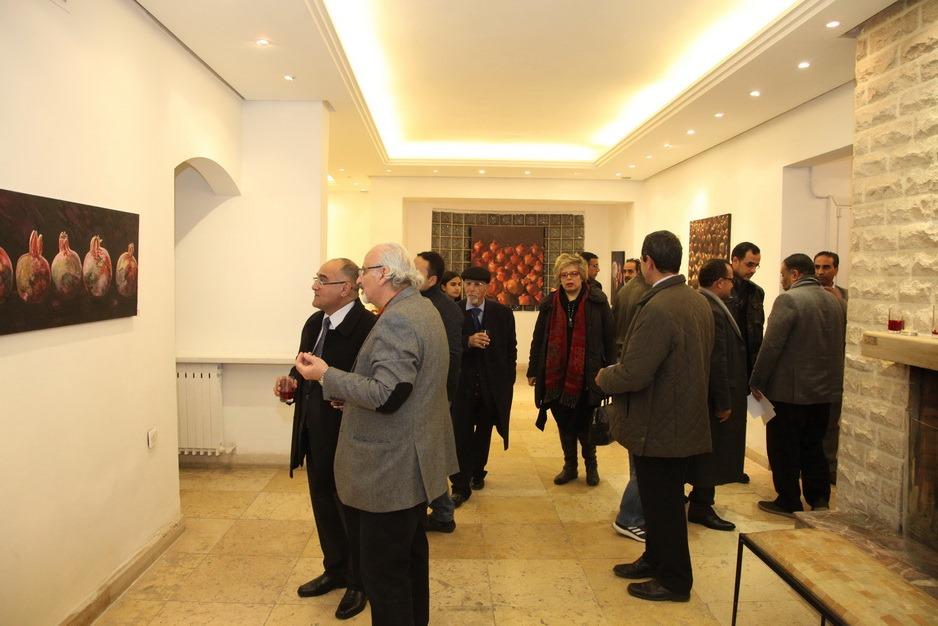
An exhibition entitled Desert Navigation by Jordanian visual artist and researcher Hani Hourani recently opened at the Ru’a Arts Centre gallery in the Jordanian capital, Amman. In this exhibition, the artist embraces the aesthetics of the desert: its emptiness and silence, its vastness and expansiveness, and its horizon opening onto infinity.
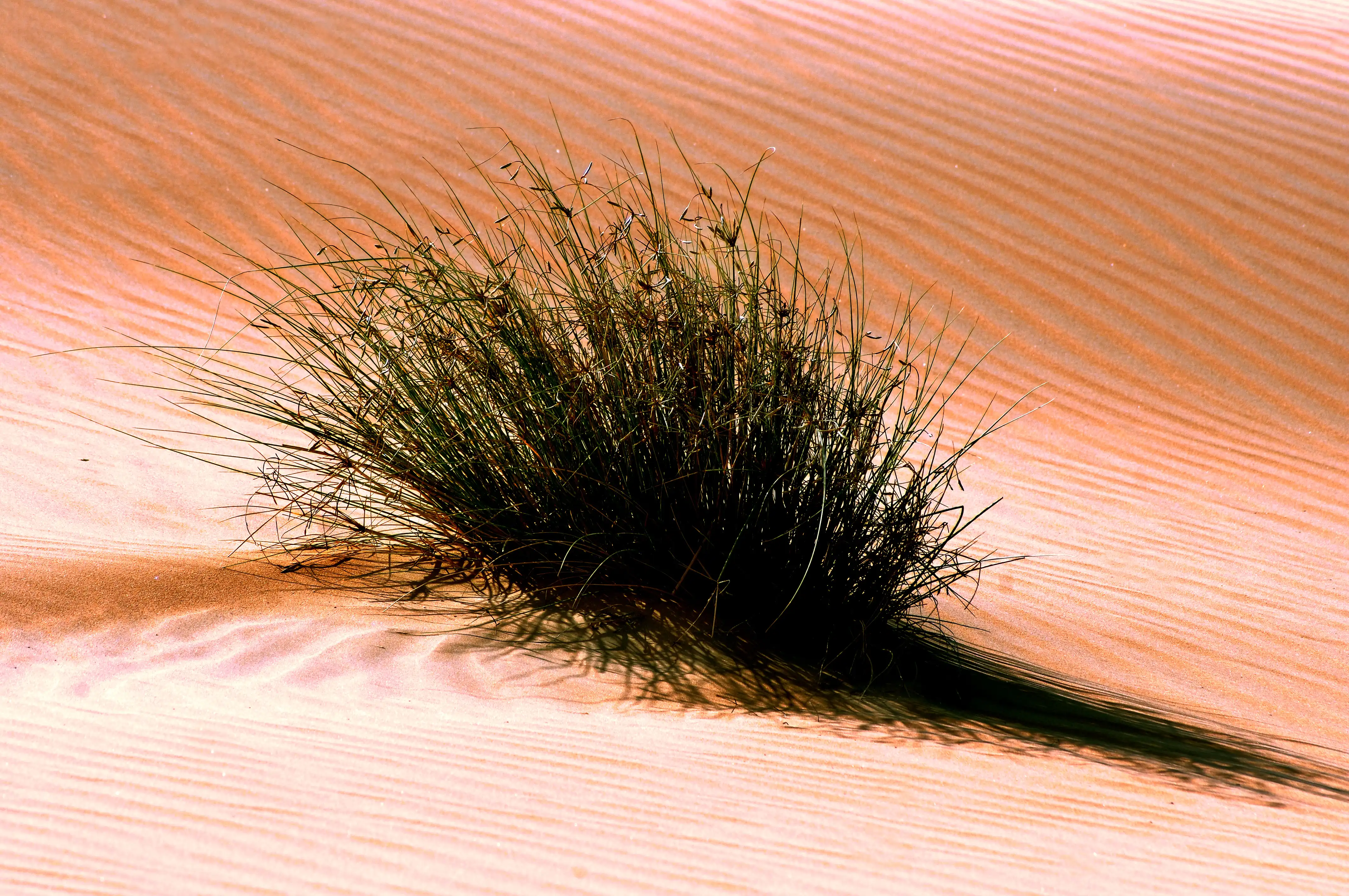
Through carefully considered photographs imbued with purely chromatic and aesthetic values, and an abstract visual exploration of the desert landscape and its aesthetic paradoxes, Hourani presents us with a serious experiment at the intersection of visual art and photography. On the one hand, he distances the image from the direct, superficial documentation of a tourist’s gaze. At the same time, he tests the capacity of the photograph and the camera lens to create a purely pictorial experience, treating colour and visual form within the framework of a painting.
Despite the many works in which a considerable number of photographers and visual artists have explored the desert and its beauty, Hourani’s photographs stand apart in their aesthetics and visual inquiry. They move away from a documentary sensibility towards the abstraction of the desert landscape’s chromatic, dynamic and pictorial rhythms, and the purely aesthetic and human meanings they embody.
Although photography generally imposes an impression of three-dimensionality, Hourani is strikingly drawn to the image’s two-dimensional character, seeking to elevate photographic work to the aesthetic values of abstract visual art. In my view, his works cannot be seen merely as three-dimensional representations. Their beauty lies in the way they visually suppress the third dimension, appearing instead as two-dimensional abstract images with distinct ornamental and graphic qualities. Hourani’s concern was not to imitate the photographed object; rather, it is the absence of that “photographed thing” that distinguishes his work, apart from a few pieces in which he deploys the “photographed element” in a purely ornamental manner. By “ornamental”, I mean a tendency towards pictorial values governed by a geometric, visual and aesthetic logic, rather than “ornament” in the sense of mere embellishment, as some assume.
The desert looms before the photographer’s lens, oppressive in its harshness and unyielding in its essence. Yet, at the same time, it is transparent, moving through the soul with the lightness of the wind, as pure as silence and as vast as the horizon: ravenous, peaceful, aggressive, harsh, still, changeable, ungrateful, faithful—yet, for all that, truthful and enchanting.
In the opening of his introduction to the exhibition, Hani Hourani states:
“Until recently, to the Arab eye the desert was nothing but a symbol of barrenness, aridity and monotony, even a source of fear of becoming lost or wandering among indistinguishable sands and hills. It is the material embodiment of aridity, drought and emptiness, and a source of the threat inherent in the logic of need and raiding…
“But for those who have known it, the desert is not merely barren land, eternal stillness or endless reaches of monotony. It is more than that: a place that generates philosophy and imagination. It is where ideas and images are born. It is the place where you can look into the distance, as far as possible, without obstacles interrupting your line of sight or your gaze being distracted among objects and places. It is the place that gave birth to poets and prophets, or to visions that transcend the surface of reality…”
He adds:
“The desert, with its scarcity of material bounty, taught human beings to respect the few things they have and to be content with them. It is where the greatness of living creatures, and their ability to endure the harshest conditions, have revealed themselves. It is where the simplest creatures acquire exceptional value, where the stark contrast between scarcity and barrenness, on the one hand, and the capacity for growth and life, on the other, becomes apparent. Look at those desert plants that spring from the sands, making their way with what little water and nourishment is available. Look at the camel, the birds and the reptiles that move through the desert or wander among its plateaus, continuing one cycle of life after another, endlessly, sustained by very, very little.
“The Arab eye, accustomed to fleeing its arid surroundings and looking longingly towards lush green and shimmering blue, has failed to see what the ancients saw in their desert environment. For this desert has never been, is not, and never will be a place of death or lifelessness. Contrary to the stereotype, it is full of detail, rich in colour, and fascinating to anyone who observes the transformations, fluctuations and surprises it holds.
“The desert is not simply limitless quantities of fine sand. It is also vast open space, air and wind, and even rain and thunderstorms. It is a place full of surprises: where calm turns into sudden tumult, where continuity is broken by the unexpected, where searing temperatures fall by tens of degrees within hours or less, and where contrasts reach their utmost intensity.
“The desert is not a terrifying place of silence. Nor is it an eternal prison of melancholy. It is a mixture of things and their opposites: paradise and hell, prison and freedom, melancholy and joy. It is the place where paradox reaches its furthest extreme, and where contradictions dwell in perfect harmony!
“The desert may induce boredom at one moment, yet at another it is the only place where one can commune with oneself without obstacles. It may be the place where nothing happens and no change is worth mentioning, yet it is also, at the same time, the place where the mind works ceaselessly and memory wanders without end…”
The critic and artist Dr Mazen Asfour, who teaches criticism at the Faculty of Arts and Design at the University of Jordan, says:
“Hani Hourani, an artist of the 1960s generation, returns to us with a new experiment that explores the language of spaces and surfaces through the camera lens. Here the lens is approached with a painterly vision that makes it a counterpart to the brush, or an equivalent tool for creating his own painting…
“Despite their reduction and rich abstraction, Hourani’s works are not detached from the broader plane of lived reality, nor from our environment, space or time. Rather, they draw inspiration from lived moments or record details drawn from cracks in walls and from the human presence revealed in an invisible touch upon surfaces…”
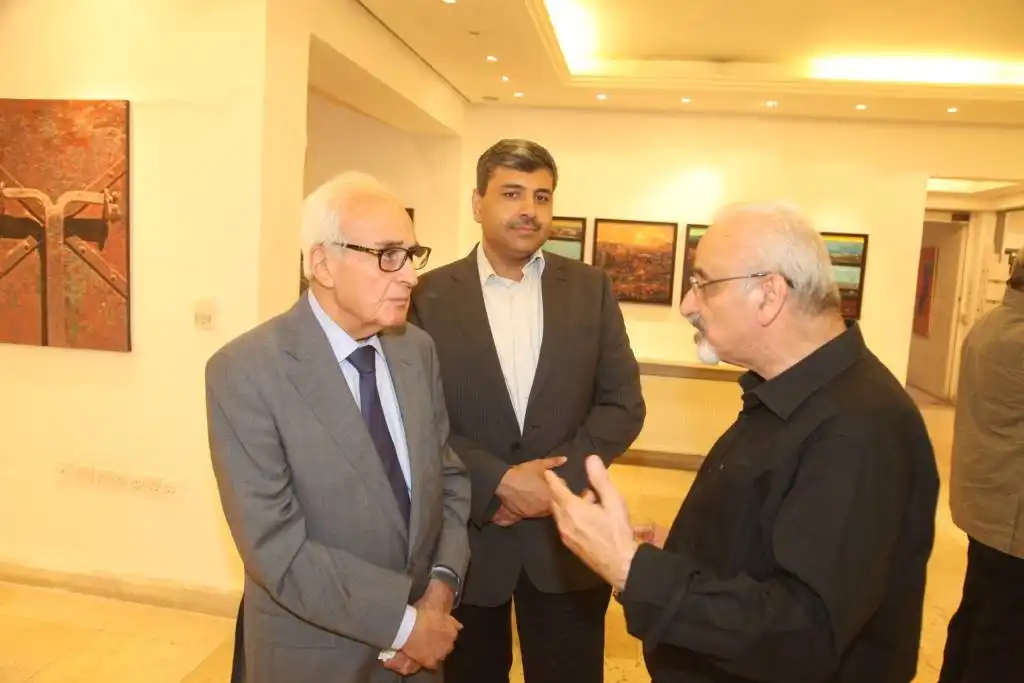
A critical seminar on Hourani’s work was also held alongside the exhibition. The artist spoke about his artistic career as a whole. Participants included Jordanian critic and visual artist Mohammad Al-Amiri, Jordanian artist Ali Maher, and critic Dr Mazen Asfour. The seminar drew a large audience of artists, critics and other interested visitors.
Al-Quds Al-Arabi, 14 January 2007.