EssaysNovember 11, 2026
Articles about Hani Hourani - Hourani's photographs in (Visions) .. The scene in all its elegance
Hani Hourani6 min read
Hourani’s Photographs at Ru’a: The Scene in All Its Elegance

By Rasmi Al-Jarrah
Hani Hourani embraces the scene and presents it with a lover’s sensitivity, drawing so close to its details that you imagine yourself part of it. His images brim with vitality, while the photographs and wall compositions hosted by the Ru’a Arts Centre gallery take us on a panoramic journey with his lens through the Arab countries he has recently visited.
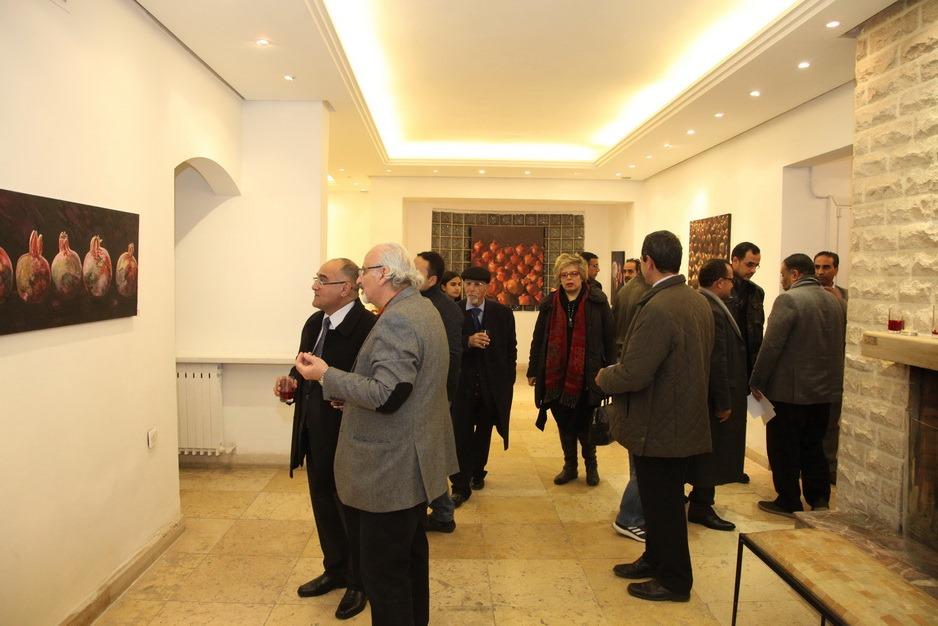
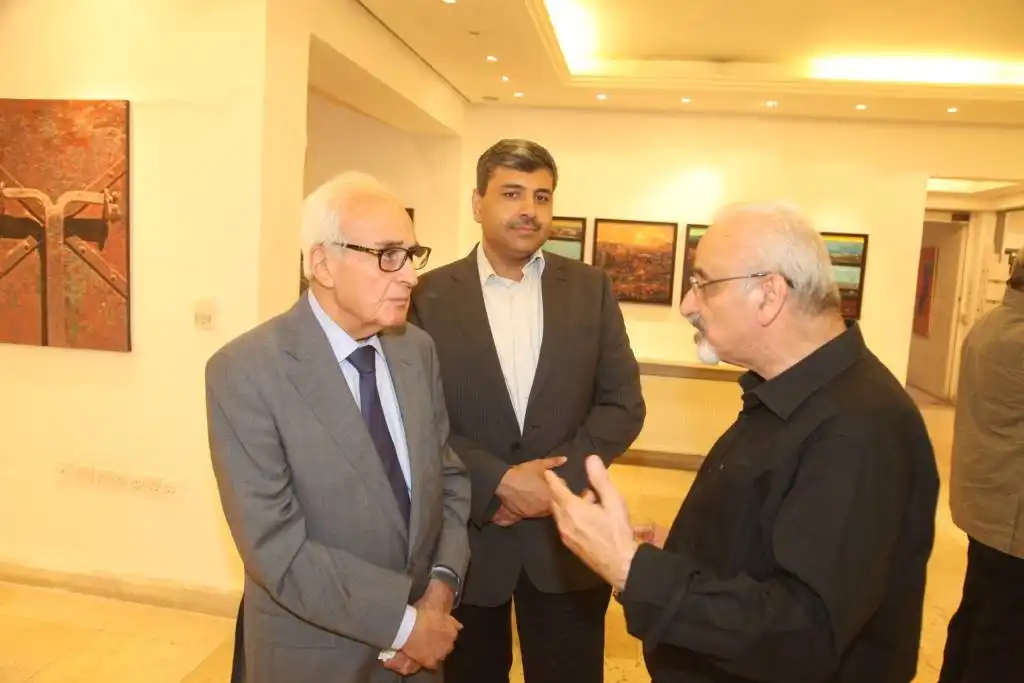
The exhibition, whose opening was held under the patronage of Dr Omar Razzaz, Director General of the Social Security Corporation, comprises 41 photographs and wall compositions. All are in colour except for the black-and-white Dervishes wall composition. A distinguishing feature of this body of work is the variety of printing techniques and media: fabric mounted on wood; photographic prints mounted on wood; photographs on canvas; semi-gloss paper mounted on wood; drawing on photographs; and blue paint and sand applied to photographs.
This, Hourani’s thirteenth solo exhibition, is entitled Details. He takes photography beyond the conventional act of capturing an image. He aspires to a photographic work of art, rather than a snapshot that anyone could freeze with any camera at any time, yet that possesses no aesthetic value and leaves no lasting impression. That is precisely what Hourani has sought to avoid. He therefore takes the image into another realm through his choice and treatment of subject, his methods of display and presentation to the viewer, the way he takes a photograph, the addition of colour, and his approach to assembling images. His vision develops along two lines: the abstract and the realist.
In terms of subject matter, the exhibition offers considerable variety. As a viewer, you find yourself entering a market; from one photograph to the next, you move into a traditional neighbourhood, a harbour, a balcony, an evening with the dervishes, the desert, or the midst of a souk. This combination offers the viewer an intense visual experience in a single place.
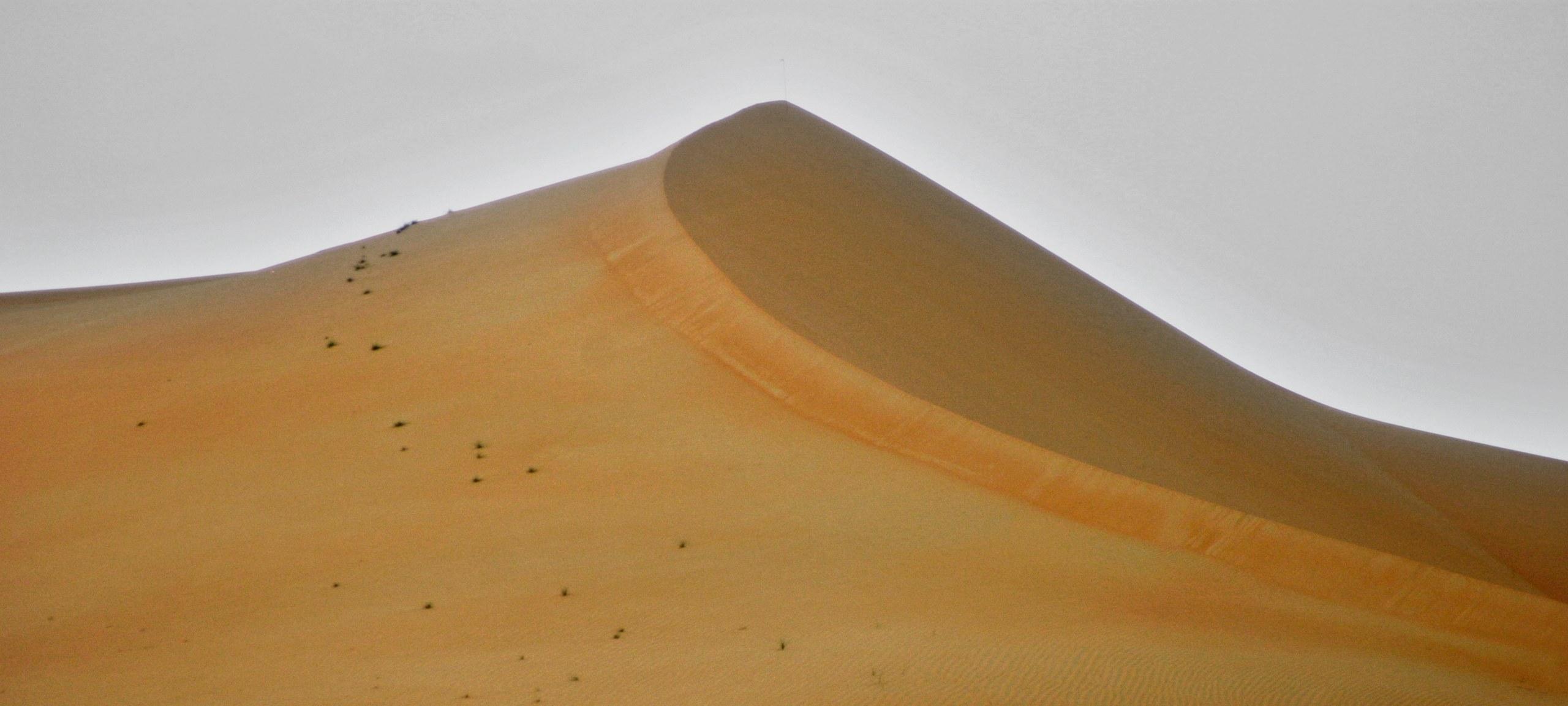
His photographs record boats moored in numerous harbours, alongside naïve drawings on the walls of houses in Casablanca; boats in Doha’s old harbour; blue windows in Tunisia; mosque domes in Rabat; modest homes on Mokattam Hill; the houses of Salt, slumbering among the hills; sands from the Arabian desert; and other details from Madinat Jumeirah in Dubai and from Petra. They also capture calligraphic designs on the walls of mosques and houses in Morocco; reflections of light on the waters of the many seas and oceans the artist has had the opportunity to stand before; house façades in Damascus and Tunisia; and symbols and details on the walls of houses in Wadi Nisnas in Haifa, Palestine, in Sidi Bou Said, Tunisia, and in Marrakesh, Morocco, among other places.
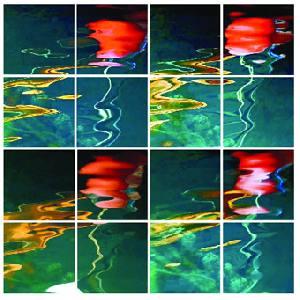
The photographs follow two strands. The abstract strand emerges in images exploring the idea of reflection. As the artist explains, when people visit other places, they look at the scene as a whole, whereas he watches how things are reflected in one another. In this, he finds the secret of beauty in the juxtaposition of things. Colour thus comes vividly to the fore, blending and rippling without distinct detail. It diffuses with the light, and details disappear, as in the works showing reflections of light in water or light on surfaces. In his realist photographs, Hourani offers panoramas and views that open onto the scene. The scene he seeks is that of everyday life, yet his skill in framing the image allows him to present it in all its elegance, for all its ordinariness—a scene we might otherwise hurry past. He restores splendour to simple, neglected places.
Presenting the wall compositions as cubes or as assemblages of equally sized photographs creates a kind of visual music through their rhythm, as in the Salt and Dervishes wall compositions, the latter photographed in Turkey. Each image registers a movement, allowing the viewer to feel the drama of the scene.
Speaking about his work, Hourani says:
“Beauty lies in the details. It is therefore hardly surprising that many visual artists leave substantial areas of their paintings covered with broad brushstrokes or entire fields of colour without detail, concentrating their work on a particular focal point—the so-called ‘centre’ of the work—where they develop the detail. Nor is it surprising that books published by museums and galleries on visual artists’ work do not confine themselves to reproducing the works in full, but select a particular detail from each painting and devote the facing page to it.”
He adds:
“By this, we do not mean that an artwork should focus on the minute, or exceedingly minute, parts of the things around us. A detail may occupy a small or large part of the overall picture that surrounds us. What we mean is seeing what goes unseen—not because it is inaccessible to the senses or to sight, but because the human mind is usually drawn away from details towards the overall picture or general scene. As a result, even important details recede from view. Are we not often astonished to realise that we had never noticed an object we pass every day, and delighted to discover, contemplate or touch it?”
He observes:
“There is an endless succession of details around us waiting to be discovered and enjoyed. Details give the things around us their overall appearance, but they also give them their individuality or distinctive identity. The infinite diversity of living things and nature thus lends life around us its vitality, renewal, and visual and sensory richness. This is what gives us the pleasure of searching for details through sight, touch and all our other senses.”
He believes:
“Although we are often preoccupied with seeing the ‘forest’ rather than a particular tree, human nature is not content merely to see the ‘general’, the ‘overall’ and the ‘whole’. It turns instead to contemplating the particular, the partial, or what we call ‘details’, and each of us becomes attached to one specific detail. Does not a particular tune, or a passage from a song heard in the morning, linger in the ear and the memory, continuing to echo throughout an entire day or longer? Does memory not summon a fragment, a scene or a particular detail from something we have seen—even in passing—whose image has remained for a while in our visual memory?”
He adds:
“Creative practitioners, especially painters and photographers, develop a kind of ‘optical scanner’ within their visual faculties, searching for a particular detail even where places such as deserts, seas or vast fields are thought to contain none. Yet training the eye to seek out ‘details’ or ‘the particular’ in the places around us leads to astonishing visual discoveries—discoveries some regard as ‘treasures’ the eye has found before the hand. The search for details also leads to exploring ways of reassembling them: bringing them together in configurations that bear no relation to their original form, or drawing them from different places and times and combining them into a new overall scene.”
Hourani was born in Zarqa in 1945. He studied political science at the University of Jordan, graduating in 1970, before pursuing a professional career in journalism, politics and research for three decades. He took courses in drawing and photography in Amman, Beirut and Moscow, as well as courses in drawing and oil painting under Jordanian and foreign artists. He has held and participated in dozens of solo and group exhibitions in Jordan and abroad, and his works are held in collections in most countries around the world.
Al-Rai, 4 April 2009.