EssaysNovember 11, 2026
Hani Hourani returns to Mother Earth, nature.
Hani Hourani5 min read
Hani Hourani Returns
To Motherland - Nature
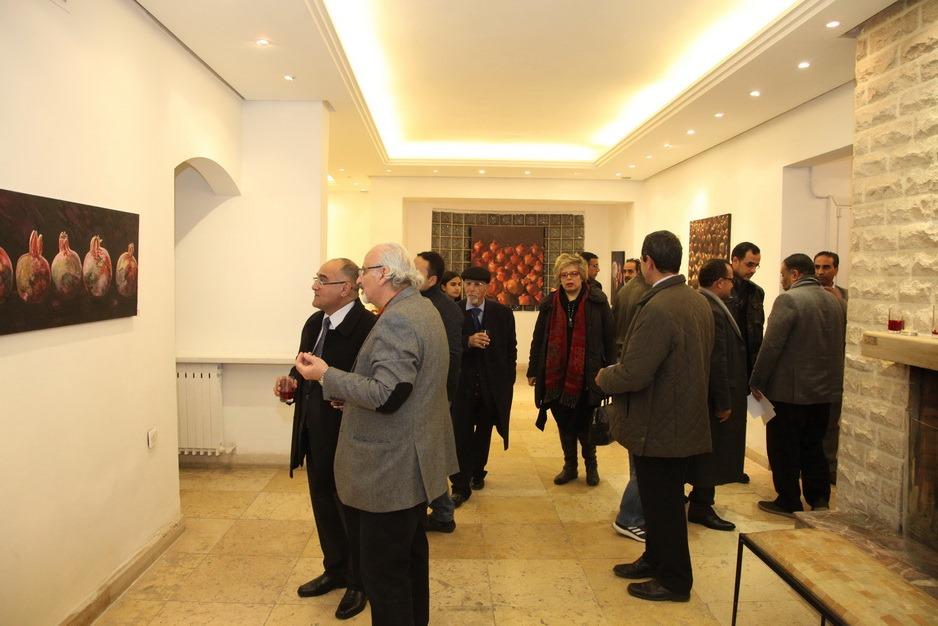
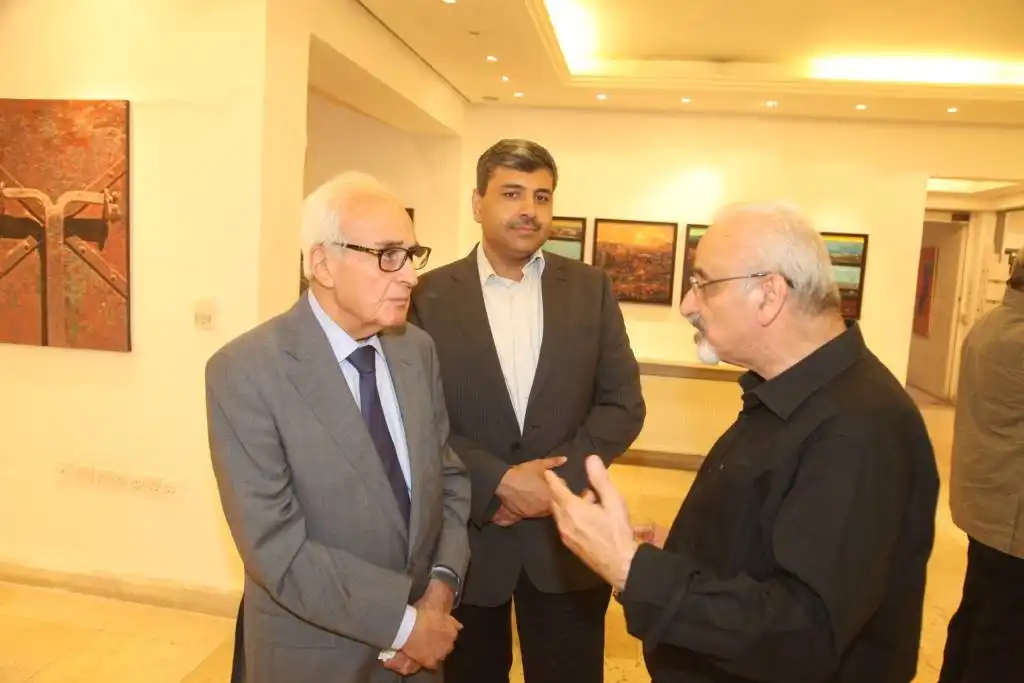
After a hiatus of more than twenty years, during which he dedicated himself to his artistic pursuits, which he had cultivated throughout the 1960s, and then turned his attention to the world of politics, emerging as a prominent figure in the Palestinian resistance factions since the 1970s, Hani Hourani invites us to his exhibition at the "Baladna" Gallery in Amman, titled "Impressions from Wadi Wala" (a valley located in southern Jordan).
The title itself leads us to the nature of Hourani's "return," a return that never truly ceased throughout his "interruption." This return is characterized, first and foremost, by a desire to reconnect with place—place as the first womb, the first beloved, the first land. Returning to this place makes us feel that an early and arbitrary separation occurred, that alienation and estrangement took place without desire, awareness, or will. Things happened suddenly, with the explosion and rise of the resistance following the catastrophic June defeat. This doesn't mean that the exhibited works represent a return to the beginning, but rather a resumption of a journey that continued timidly, hesitant to declare itself amidst the din of cannons, missiles, martyrs, and homelands ripe for fragmentation. Faced with this clamor, many found themselves drawn to the realization of the revolution and the dream, striving for liberation, return, freedom, progress, and so on. Hani Hourani was among them, and thus his return stems from place, as if the words of the poet Dr. Ezz El-Din Al-Manasra, in his introduction to the exhibition titled "Love is only for the first place," apply to him. And between Al-Hawrani's "disconnection" and "return" represent a space fraught with questions and reflections, a space filled with slogans and concepts borrowed from revolutions and ideologies that, in the last decade, have come under increasing scrutiny and objection. In response to the question of "returning" to "art," al-Hawrani poses the question of "disconnection" and its causes, believing that the issue is not his alone, but rather, as he says, "the disconnection of the intellectual from his original profession." He adds that it is "the issue of an entire generation; some of us abandoned our studies, some our original professions, some left our homeland, and some forsook the luxury of dedicating themselves to developing their own expressive language—in prose, poetry, painting, and song."
This is a generation swept away by parties, theories, and grand slogans, under the pressure of illusions of rapid change. None of these acknowledge the role of literature and art in the face of the gun and the fighting word. Thus, they returned defeated, perhaps even more so than the defeat that shattered all expectations. That—I mean the June defeat—let's allow al-Hawrani to express the creed of his generation: "We believed that the people needed a handful of professional revolutionaries who were adept at seizing the opportunity of the 'revolutionary crisis.' What could be more enchanting than the idea of radical change in one fell swoop... so that history would be at your fingertips, malleable clay shaped in your hands!"
Thus, this generation was not only forbidden, but actively contributed to the prohibition of anything that might undermine the revolutionary credentials of anyone who dared to engage in forbidden activities (poetry, poison, art) unless they served the "cause." As al-Hawrani himself says, "The generation of great defeats is the same generation of grand dreams and illusions, dreams of victory in one fell swoop..."
Regarding whether al-Hawrani's "return to art" constituted a "coup" against his political path, or whether he felt remorse or repentance, he replies, "Consciousness has its inevitable path. You cannot claim wisdom retroactively... nor can you isolate your experience from the experience of society, its needs, and its own visions."
And because The hiatus wasn't a choice but the result of specific circumstances; it was a mechanical, not an emotional, break. Perhaps it was a break from considering painting the primary or supreme means of communication with others, but it remained a private means of communicating with the self, as Hourani himself explains. This explains the dozens, perhaps hundreds, of portraits and sketches he produced during that period. Perhaps the most remarkable aspect of Hourani's return to art and his elevation to a higher level is that this return stemmed from reasons similar to those that led to his initial "break." "The issue that diverted me from painting towards direct political action is what brought me back to painting," he says. He also adds, "I returned to painting intensely and continuously with the outbreak of the Intifada in the occupied Palestinian territories at the end of 1987. I was besieged at that time, not only metaphorically or psychologically, but primarily in a physical or literal sense, and I found nothing to help me bear my feelings of helplessness and siege except painting..."
These bold confessions, born in the wake of profound collapses, also stem from a profound sense of "spiritual aridity and human sterility resulting from our surrender to the one-dimensional model of humanity."
Borrowing Marcuse's idea, Hourani reiterates our need for a "cultural revolution," essential for our society to achieve development.
This illumination of Hourani's concerns and reflections, as both politician and artist, was necessary before delving into his exhibited works, enabling the reader and viewer to connect the two worlds. (Perhaps we should also address a point that highlights Hourani's immense enthusiasm for art: his passionate engagement with the nature and role of art—specifically, painting. He displays a childlike fervor and a primal inclination towards it, as if relying solely on it, and nothing else.)
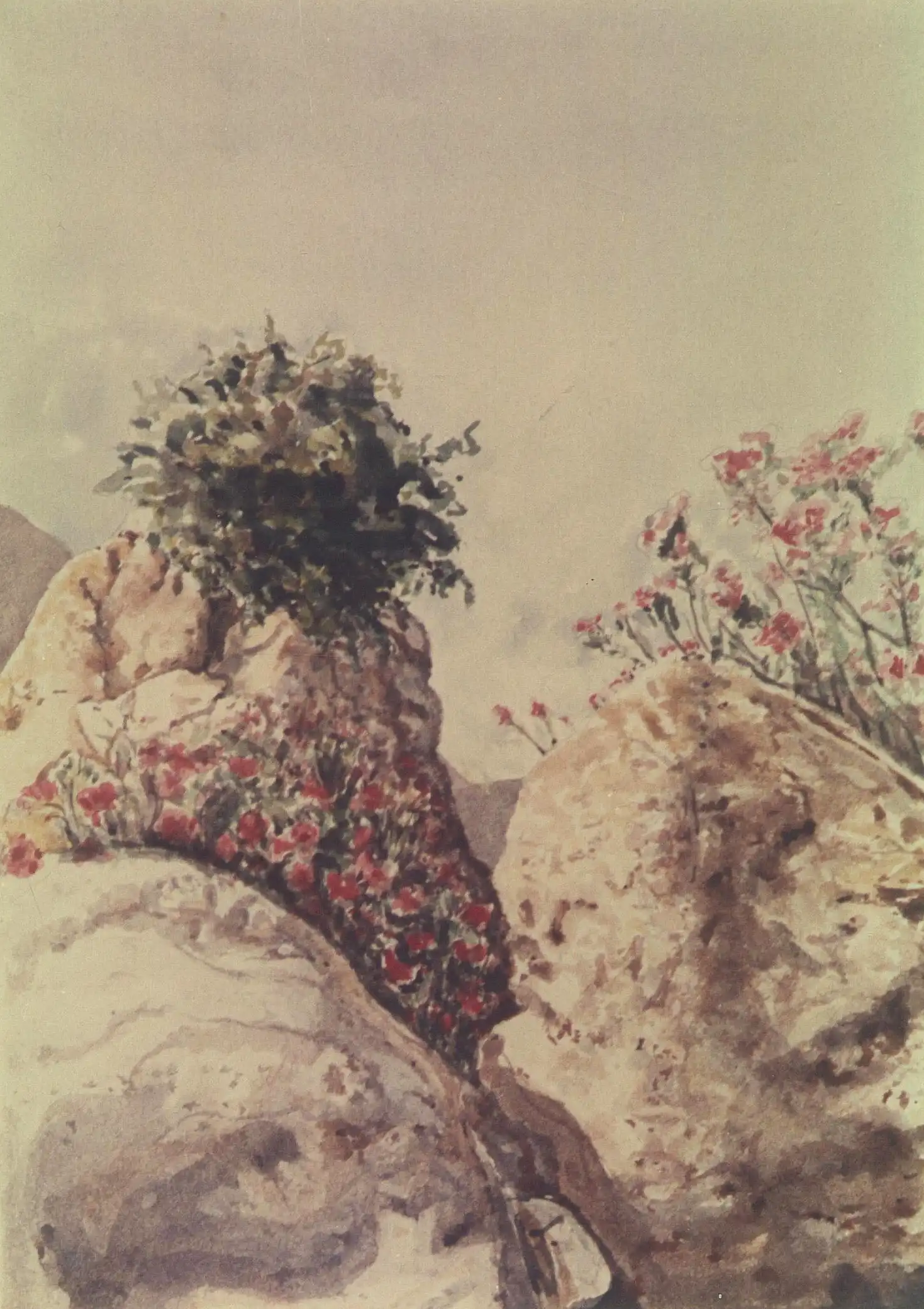
Returning to the exhibition's title, I believe it reflects only a portion of the exhibited works, not the entire exhibition. The exhibition encompasses works that are not confined to a single location, but extend to Petra, Algeria, Hama, and even Vietnam, in addition to several Jordanian cities. In thirty paintings, ranging from vibrant watercolors mixed with acrylic in some works, we encounter old places, houses, windows, and villages. Some evoke memories, while others lean towards photography. Yet all express an impressionism imbued with a transparent spirit drawn to nature and its diverse elements. From this nature, Hourani captures its most transparent aspects: flowers and trees. But he also excels at depicting small details, represented by cracks that seem insignificant except for their subtle meaning.