EssaysNovember 11, 2026
Artistic articles by Hani Al-Hourani and Ghassan Mufadala
Hani Hourani4 min read
Al-Hourani Celebrates Visual Details and Explores Their Aesthetic Diversity
Ghassan Mufadala
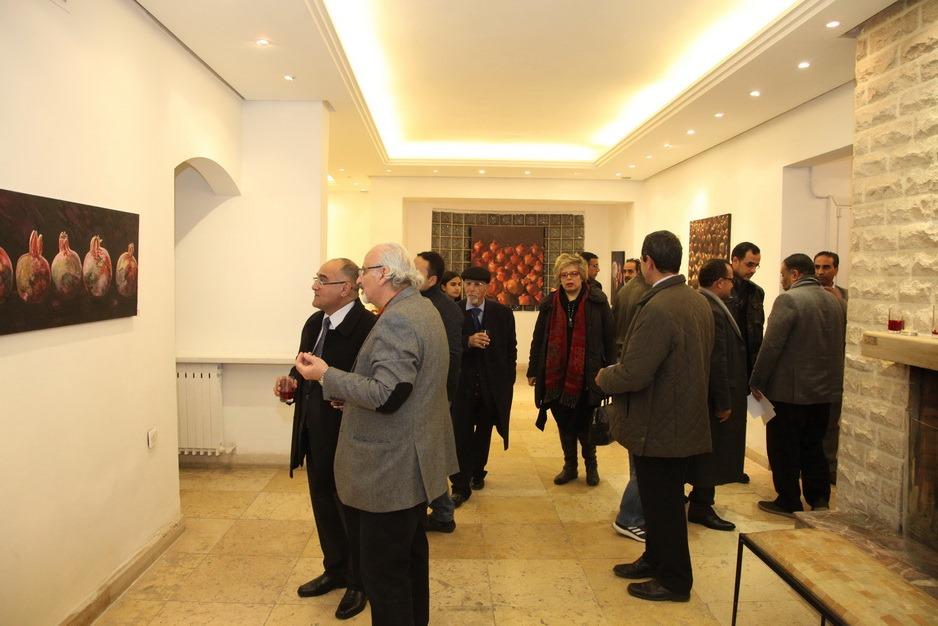
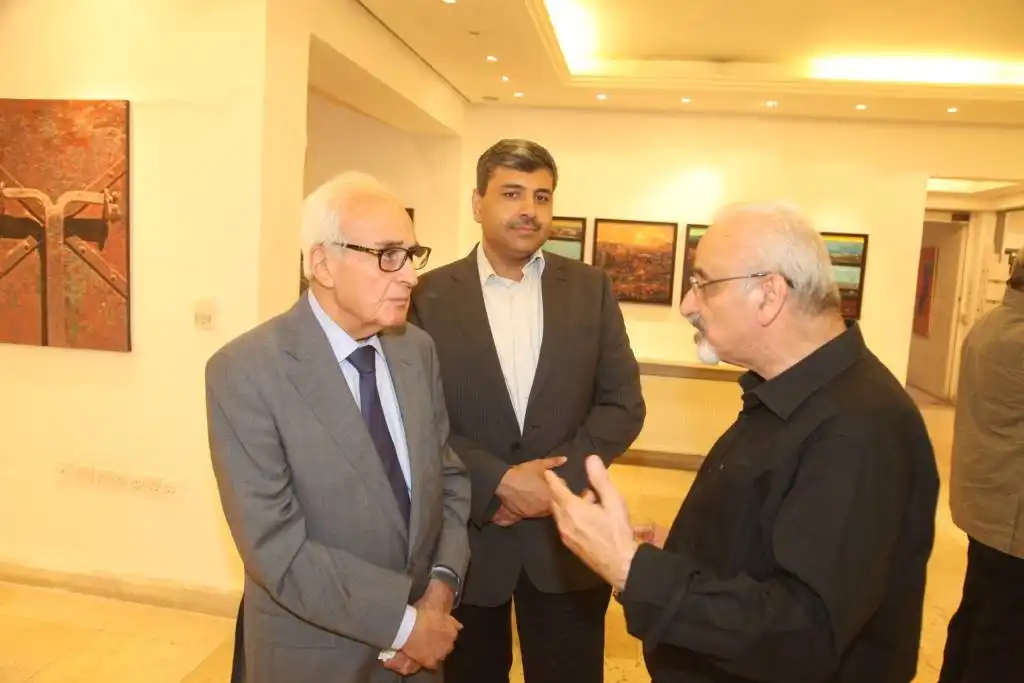
Amman – Celebrating visual details and exploring their aesthetic diversity are the keys to unlocking the horizons of vision and the atmospheres of expression in the new photographic exhibition "Details" by visual artist Hani Al-Hourani. The exhibition was inaugurated by the Director General of the Social Security Corporation, Dr. Omar Al-Razzaz, on Wednesday evening at the Ru’a Art Center.
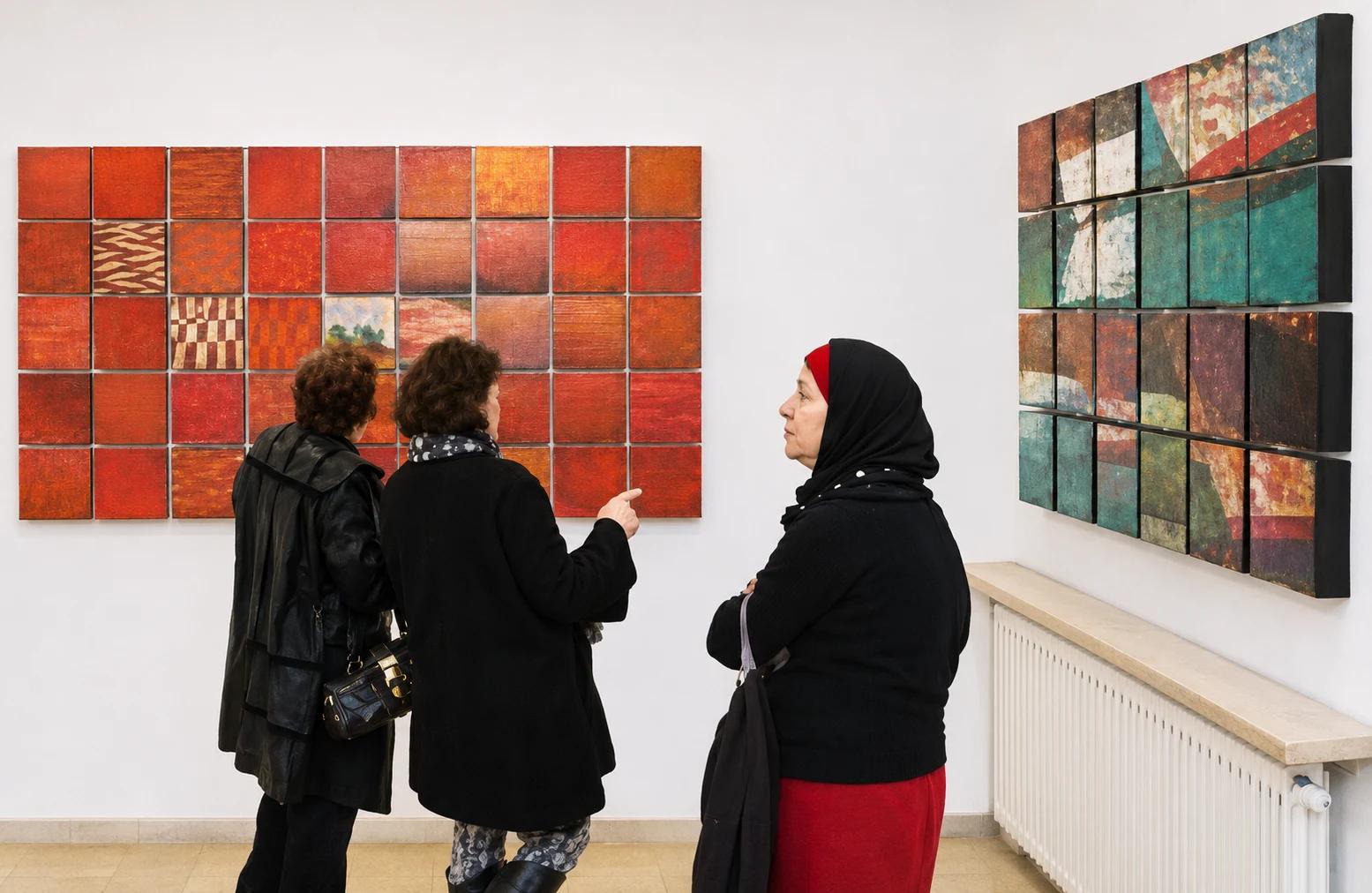
As its title suggests, the exhibition focuses on details. Most of the photographic works take the form of large and medium-sized murals, composed of numerous units, sometimes reaching fifty pieces, in addition to individual color and black-and-white photographs.
This exhibition marks the thirteenth in a series of solo exhibitions by Hani Al-Hourani, which he has held since 1996. His work has been displayed in several Arab and international capitals and cities, most notably Amman, Aleppo, Doha, Cairo, Gothenburg, and Washington, D.C. This is in addition to his recent participation with two murals titled "The Other" at the Cairo International Biennale, which opened in December 2008.
Hourani is meticulous in his photographic work, often focusing on close-ups of objects that catch his eye, particularly their surfaces and textures. He celebrates details that rarely attract the attention of the average viewer, whose gaze is drawn to the general, the easily readable, and the readily descriptive.
While the average viewer tends to "see the forest, not a specific tree," the photographer's eye seeks the detail that encapsulates the forest—the tree. This is also true in the city, where details on walls hold greater significance than those of houses, streets, or general cityscapes.
Hani Hourani's appreciation for detail has been evident in previous exhibitions, where he has captured images of boat prows, the details of their wooden surfaces, or their reflections in the water, rather than focusing on the boats themselves floating on the surface.
In his introduction to his exhibition, Al-Hawrani states that beauty lies in the details. Therefore, it is no surprise that many visual artists leave a significant portion of their paintings covered with broad strokes or entire areas of color devoid of detail, focusing their work on a specific focal point, or what is called the "center" of the work, to develop the details.
Al-Hawrani clarifies the meaning of attention to detail in artworks, saying, "We do not mean that the artwork should focus on the minute or extremely precise parts of the things around us. The purpose of the detail may be a small or large part of the overall picture around us. Rather, the intention is to see what is unseen, not because it is not apparent to the senses or sight, but because the human mind is usually preoccupied with the overall picture or scene, rather than the details."
With this perspective, Al-Hawrani treats visual details as independent elements within the structure and composition, according to the Gestalt theory (the theory of form, which considers the whole within its perceptual field not as a sum of its parts. The whole always possesses inherent characteristics, achieving its internal order and independence).
Hani Hourani's new exhibition doesn't focus on a single theme, but rather on the immense diversity of details in the life around us. Equally significant is his execution of his murals, dividing them into distinct, regular units. These units are punctuated by a void that creates an optical illusion, making the images appear unified despite their separation. He utilizes the depth between each section of his murals.
Another distinctive feature of the photographs in the "Details" exhibition is their liberation from the frame and traditional framing. The exhibition also showcases a variety of sizes and shapes, moving away from conventional dimensions and achieving a three-dimensional effect by displaying them on boxes of varying sizes and thicknesses.
Furthermore, Hourani employs diverse printing materials such as paper, fabric, and others.
It's worth noting that Hani Hourani is a visual artist from the 1960s generation. He withdrew from painting for over two decades, dedicating himself to political activism and research, before resuming his artistic practice in the early 1990s. After a single exhibition of his watercolors in 1990, he focused solely on exhibiting his photographs, though he continued to paint for the last two decades. He often describes his photographic style as "drawing through the camera lens," and he sometimes incorporates different colors and materials into his photographs.
The artist Hani Hourani was born in Zarqa in 1945. He received his university education in political science from the University of Jordan, graduating in 1970. He then dedicated three decades to journalism, politics, and research, and he also completed courses in painting and photography in Amman, Beirut, and Moscow.