EssaysNovember 5, 2026
Waved Landscape
Hani Hourani5 min read
At Ru’a 32 Gallery
Opening of Hani Hourani’s “Textile Series” Exhibition
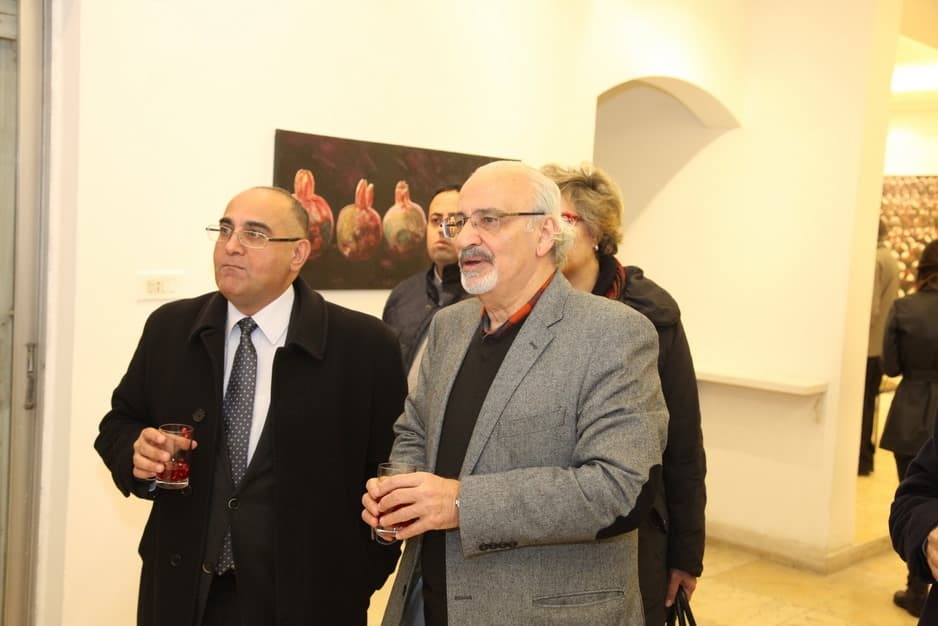
Ru’a 32 Gallery will open an art exhibition of works by Hani Ru’a Hourani, titled “Textile of the Scene,” at 6:00 PM tomorrow, Monday. The exhibition will run for a month.
The exhibition features approximately sixty works created during his twenties, showcasing examples of fluidity and his artistic approaches. Through these works, he attempts to illustrate “uncommon things” or to express “things he has reached in another language.” Hourani believes that the sole justification for his return to the art of painting is to be a distinct voice and to offer something new. The works he presents here, the justice of a personal attempt to possess a space "of free will from the surrounding gloom," or "to search for a window of light and fresh air," as he puts it, create a step towards returning to his initial principle as one of the painters of the 1960s, and resuming his contribution to the Jordanian and European art movement by connecting his tractors and vehicles with the martyrs or the "general view"—the landscapes he reweaves anew to practically dream, distributing between reality and imagination.
It is worth noting that Hani Hourani (born in Azraq, 1945) grew up with a range of interests. He practiced painting in his early youth, was one of the founders of the "Jordanian Painting and Sculpture Symposium," and held six solo exhibitions before the 1967 war swept him into the political profession that continues to define him from the last century. Even at this stage, his interests were divided between direct political activism and rigorous research, which resulted in several authored books and dozens of research papers, most notably his seminal work, "The Economic and Social Structure of Transjordan (1921-1950)." He also launched the magazine "New Jordan" from Nicosia, Cyprus, between 1984 and 1990, and pursued journalistic work, writing for Jordanian and Arab daily newspapers. In 1989, he was invited to Jordan to establish the New Jordan Center at the university. Simultaneously, he held a solo exhibition of his watercolors in 1993. His passion for photography, which had already been celebrated in Beirut and Moscow, soon manifested in a series of commercial exhibitions since 1996, totaling 14. His experimental works have also been exhibited in Arab capitals and cities (Amman, Cairo, Doha, Manama, and Brussels) and Western capitals (Gothenburg, Sweden, and Washington, D.C.). Hani Hourani does not place The boundaries between being a visual artist and a photographer are blurred. In reality, he captures his images with a painter's eye, and at the same time, he can often paint based on his photographic work. He has successfully constructed his paintings through collages of his experimental photographs and drawings using various materials, in addition to his numerous photographs or the colorful touches of his brush. He has become one of the first Jordanian and Arab artists to break down the barriers between photography and painting.
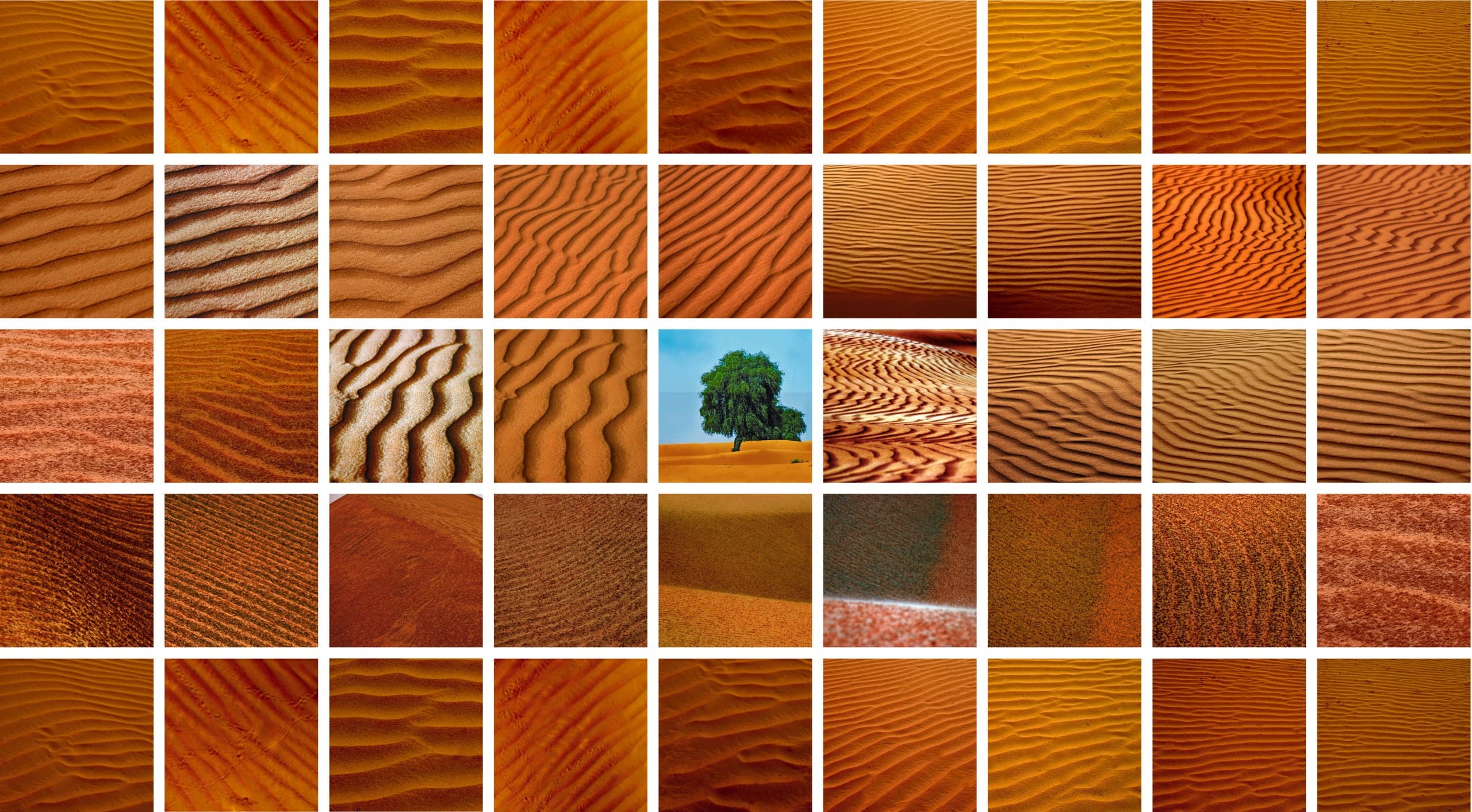
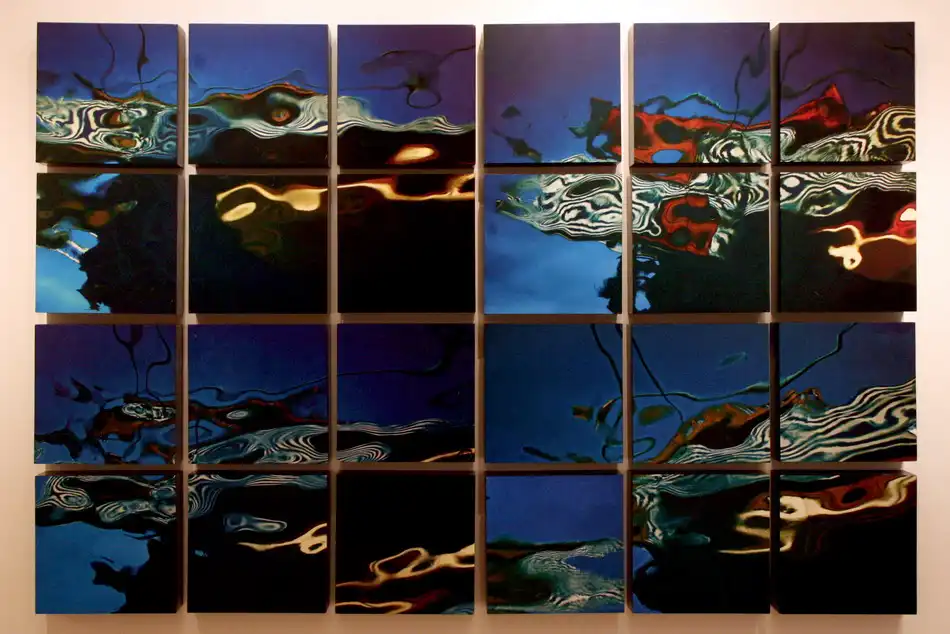
He also places great importance on texture, detail, and the effects of time on walls, such as street walls, doors, and windows. He celebrates the papers people, especially children, write on, such as books and drawings on walls. He also considers the ordinary and the worn, such as wood, doors, boats, and the most stubborn rust covering metal structures, such as old bodies, cars, and barrels—all reflections of the city's sprawl. Florida Hani Hourani's artwork is close to several modern schools without being confined to any of them. He chooses between urban art, street art, and environmental art. A particular passion for the austere painting, which derives its beauty from the volume and presents surfaces in muted or muted tones.
She also uses various materials and pigments to bring out the figurative nature of the photographs she produces, meticulously planning the raw material. Here, the sensibilities of watercolors, pastels, or colored inks draw the eye not only to the subject of the image but also immediately to its texture and the materials used in its creation.
In his latest exhibition, "The Fabric of Viewing," there is an anatomical reading of rock sections painted on the slopes of the Mediterranean Metropolitan Road in the Southern Ghor region. These sections contain veins that form an endless panorama of colorful formations and compositions that challenge, even mock, the artist's imagination.
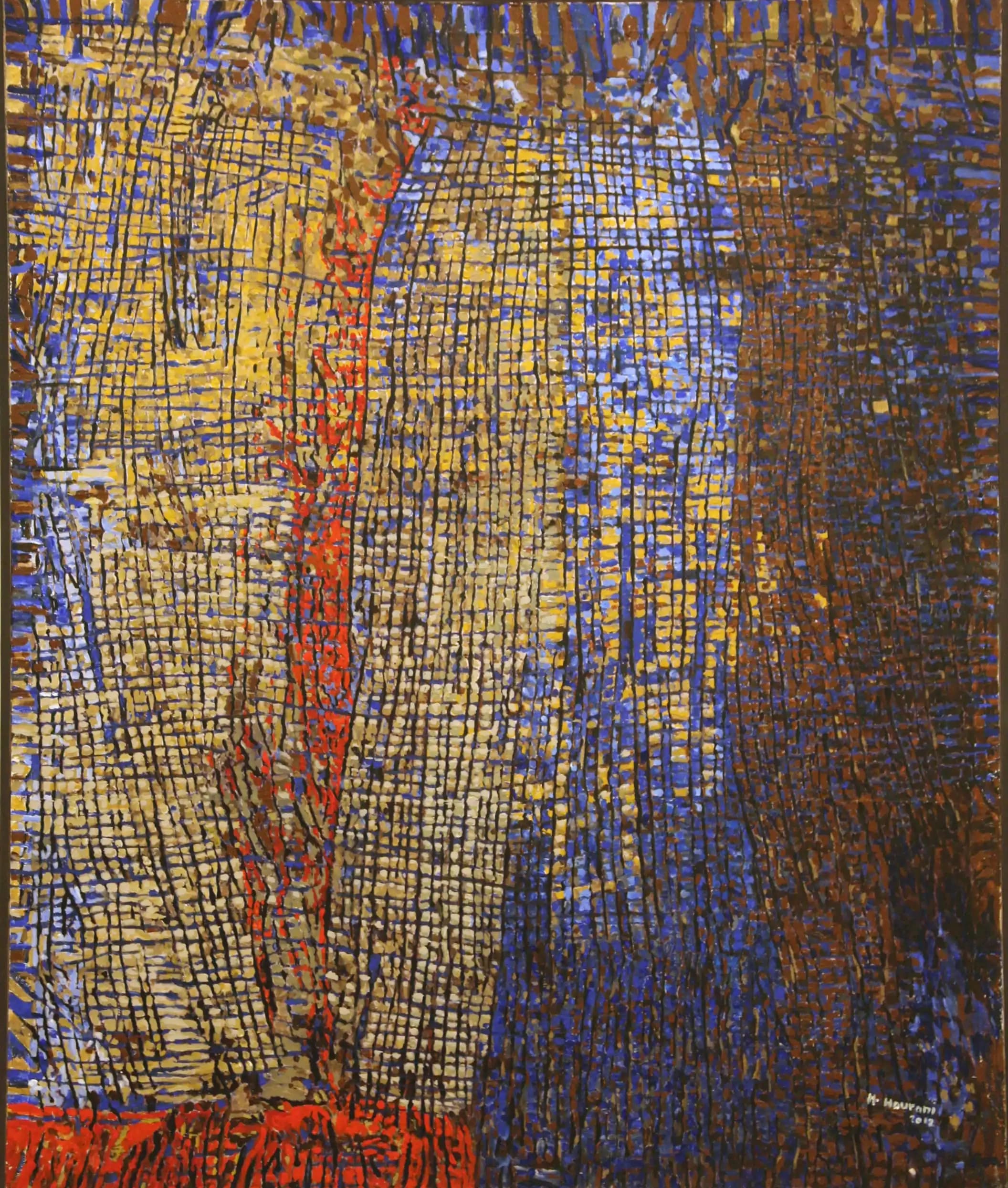
From the specific elements that unify his paintings, Hourani moves in his latest works to a new approach, one that transforms the scene into a visual tapestry. This tapestry records an infinite number of units that sometimes take the form of buildings and towering skyscrapers, fabric curtains, or a natural landscape. What unites them is that they weave together reality and imagination, creating something distinctively world-like. Organic, and rich with its team.
Hani Hourani's recent studios draw from several conscious, and perhaps unconscious, sources. They tend to depict contemporary urban visions with towering streets, or "towers" closer to the world of digital designs that grow without ever bending, like the curves of Arabic calligraphy. These are vessels composed of countless units of colorful scenes reminiscent of the invisible cat of a television screen, or the innumerable units of an image. They also allude to a heritage source: mosaic, where the brushstrokes and the colorful density of these strokes replace the pieces of wall or the water glass in a traditional mosaic painting. You swim between two visual references: one to the distant past, and the other the professional approach of the digital revolution. The "Naseej Naseej" exhibition is haunted by visions that aspire to soft, intimate architecture, like the trees of knights and the air, buildings and cities that converse with and draw towards the forest.
ShareTwitter